
PROGRAM OUTLINE
Sunday, June 21
- 8:30 – 16:00 Pre-Symposium workshops (meeting point)
- 16:00 – 18:30 Guided visit to the botanical garden
- 19:00 – 21:00 Welcome reception
- 15:00 – 19:00 Registration
Monday, June 22
- 8:00 Registration
- 8:50 Opening
- 9:20 – 19:00 Keynotes, parallel sessions, and breaks
- 19:10 – 20:30 IAVS working group meetings (Latin America, Vegetation classification)
- 19:00 – 21:00 JVS/AVS meeting
Tuesday, June 23
- 8:30 Registration
- 9:00 – 19:00 Keynotes, parallel sessions, posters, and breaks
- 19:10 – 21:00 IAVS Council
Wednesday, June 24
MID-SYMPOSIUM EXCURSIONS
(Meeting point to be announced)
Thursday, June 25
- 8:30 Registration
- 9:10 – 19:00 Keynotes, parallel sessions, posters, and breaks
- 18:40 – 20:00 IAVS working group meetings (Ecoinformatics, Historical Vegetation Ecology)
- 18:40 – 20:30 VCS meeting
- 20:30 – 23:00 Symposium dinner
Friday, June 26
- 8:30 Registration
- 8:50 – 16:30 Keynotes, parallel sessions, and breaks
- 16:30 – 17:00 Coffee Break
- 17:00 – 18:00 IAVS General Assembly
- 18:00 – 18:30 Closing ceremony
PLENARY SPEAKERS
Key notes

Mark Vellend
Université de Sherbrooke, Québec, Canada
Biodiversity change and adaptive dynamics in plant communities
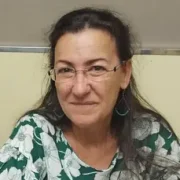
Begoña García
Pyrenean Institute of Ecology (CSIC), Spain
Collaborative Science: an essential tool for monitoring biodiversity dynamics

Fernando Maestre
King Abdullah University of Science and Technology, Kingdom of Saudi Arabia
Beyond the barren image: The unexpected diversity of dryland vegetation
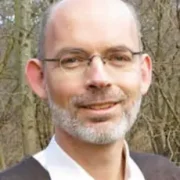
Jens-Christian Svenning
Aarhus University, Denmark
Vegetation Dynamics in a Novel Biosphere: Integrating Ecology, History, and Futures
(Alexander Humboldt IAVS award talk)

Glenda Mendieta
Philipps University of Marburg, Marburg, Germany
From canopy to conservation: Rethinking vegetation through vascular epiphytes
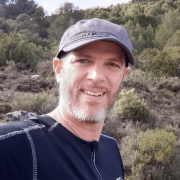
César Morales del Molino
Universidad de Alcalá (UAH) Madrid
Long-term dynamics of conifer forests in the mountains of southern Europe

Mariana García Criado
Centre for Ecological Research and Forestry Applications (CREAF), Spain
A warm tundra: Plant diversity dynamics across Arctic and Antarctic ecosystems

Roshanak Darvishzadeh
University of Twente, The Netherlands
Monitoring Essential Biodiversity Variables from Space
Special Plenaries
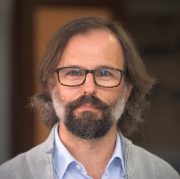
Germán Orizaola
University of Oviedo, Biodiversity Research Institute (IMIB-CSIC), Spain
Communicating Vegetation Science on Social Media
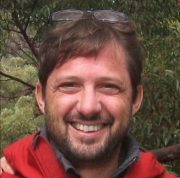
Borja Jiménez-Alfaro
University of Oviedo, Biodiversity Research Institute (IMIB-CSIC), Spain
The Ibero-Atlantic Region: A Biogeographical Introduction and Excursion Briefing
WORKSHOPS
All workshops will take place on Sunday, 21 June 2026, with the meeting point at the main door of the Jardín Botánico Atlántico of Gijón.
Workshops are free of charge for all registered participants of IAVS 2026. Please note that space is limited and seats will be allocated on a first-come, first-served basis after registration.
Workshop 1 – Belowground workshop IAVS 2026
Organizers: Jitka Klimesova (Jitka.klimesova@ibot.cas.cz), Jana Martinkova (jana.martinkova@ibot.cas.cz)
Schedule: from 8:30 to 12:00 and from 13:00 to 15:30
Places: 20
Description: For plant growth, the belowground plant organs are crucial as they reflect different strategies and functions (being woody or herbaceous, being clonal or non-clonal). We will start the morning session with short introduction explaining how plants grow in ontogeny (from seed to adulthood and death) and in a season (from spring sprouting to autumn shedding). After the introduction we will go to the field to dig up plants to see different belowground organ types and strategies (prepare to use a spade and get dirty). In afternoon session, we will present case studies about ecology of belowground organs and discuss the topic highlighting gaps in our knowledge.
Requirements: none
Workshop 2 – Joint Species Models Workshop: the HMSC Package
Organizers: Teresa Morán (moranteresa@uniovi.es)
Schedule: from 10:00 to 13:00 and from 14:00 to 16:00
Places: 15
Description: This workshop will introduce joint species distribution models as a tool for studying community assembly. We will focus on the Hierarchical Models of Species Communities (HMSC) approach, which enables the quantification of species–environment relationships while incorporating their functional traits and phylogenetic relatedness. The workshop combines theoretical foundations with hands-on exercises using the HMSC package. At the end, participants will:
- Acquire a working knowledge of community assembly concepts.
- Gain basic experience with the HMSC package.
Requirements: Bring a laptop with R, RStudio installed. Previous knowledge of basic R language.
Workshop 3 – Hands-on training in open and reproducible science
Organizers: Aud Halbritter (aud.halbritter@uib.no), Sonya Geange (sonya.geange@uib.no)
Schedule: from 10:00 to 12:30 and from 13:30 to 16:00
Places: 25
Description: Open and reproducible science aims to enhance accessibility, transparency, and reliability by openly sharing data, methods, and results. With the ongoing climate and biodiversity crises, the need for open and reproducible science is more urgent than ever. Progress in ecological research is often slowed because data and methods are not openly available, and because many researchers lack the skills to effectively handle, manage, and share their work. On top of that, while many funding agencies and scientific journals now require open and reproducible practices, these skills still receive little attention in most teaching and training programs.
In this workshop we will provide a general introduction to open and reproducible science and will present tools to improve the scientific workflow. We will introduce the principles of Open Science, FAIR data, and questionable research practice. In the practical part we will cover reproducible documents using Quarto and on version control with git and GitHub. The workshop will begin with an overview and group discussion, but most of the time will be dedicated to hands-on exercises in using Quarto and git/GitHub. By the end of the workshop, participants should feel comfortable working with both tools.
Requirements: Bring a laptop with R and RStudio installed. If you are comfortable using Positron, VSCode, or Cursor it is also fine, but the teaching material will be based on RStudio. Previous knowledge of basic R language.
SOCIAL PROGRAM
Welcome cocktail and early registration
Meet other participants and taste local cheese and cider
- When: Sunday, 21 June, 18:30 – 20:00h
- Where: Jardín Botánico Atlántico de Gijón (main door)
- How much: included with registration (symposium badge required)
San Juan en la playa
Join Gijón citizens in celebrating the summer solstice with a big fire
- When: Tuesday, 23 June, from 20:00h onwards (be careful, the next day is the excursion)
- Where: Playa de Poniente (Poniente Beach). Meeting point to be announced
- How much: You should bring your own food and drinks to the beach!
Music party
Celebrate the IAVS community with international music
- When: Wednesay, 24 June, from 20:00h onwards
- Where: Pura Vida Beach Club
- How much: Access and one drink included with registration (ticket required)
Symposium dinner
A traditional Asturian “espicha” (convivial meal with cider)
- When: Thursday, 25 June, 20:30h – 23:00h
- Where: Museo del Pueblo de Asturias.
- How much: included with registration (symposium badge required)
